Language arts
Grounded in the science of reading and writing. Students read deeply, write across genres, conduct research, support ideas with evidence, revise their work, and develop their own voice.

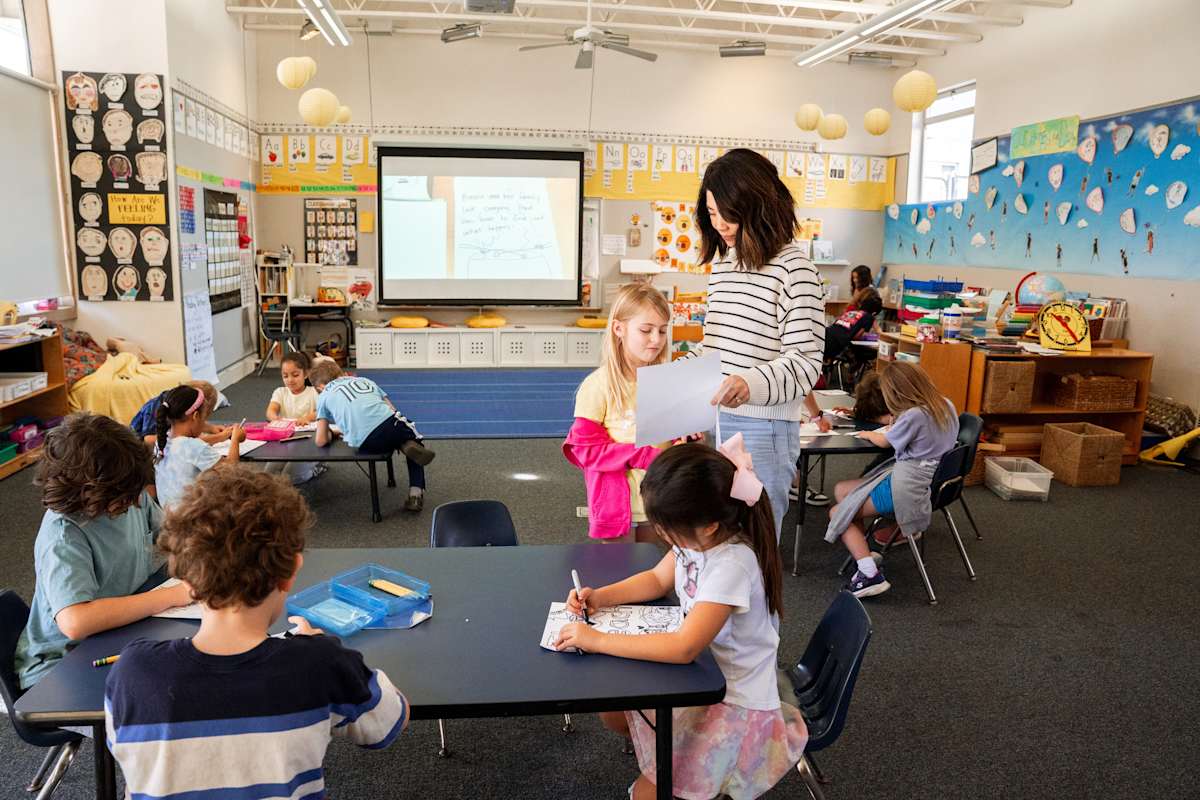
Five strands, taught as one integrated program rather than five separate subjects.
Grounded in the science of reading and writing. Students read deeply, write across genres, conduct research, support ideas with evidence, revise their work, and develop their own voice.
A structured, systematic, cumulative approach with explicit multi-sensory instruction in phonemic awareness, phonics, vocabulary, fluency, and comprehension. Students read for pleasure, for learning, and for information, and we meet each learner at their level.
Every student is an author. Children move through the full process of prewriting, drafting, revising, editing, proofreading, and publishing, treating writing as a craft that evolves. Writing here is about making meaning, not recording information.
Public speaking and active listening are embedded across the curriculum, so even the quietest voices emerge with confidence. Students build on each other's thinking in class discussion and in front of the whole school at Circle Time.
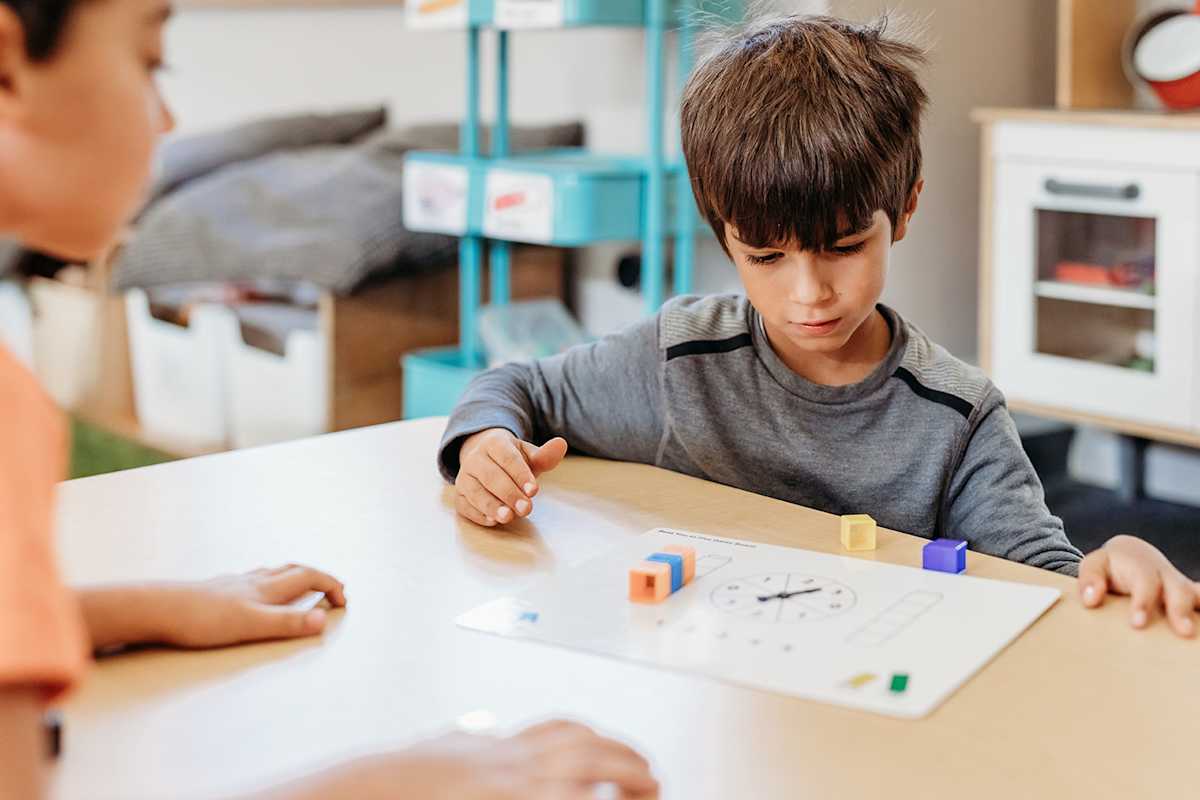
PS1's math program is designed to foster a positive math identity. All students are known as competent mathematicians and are supported to extend their learning.
Students develop mathematical reasoning by solving complex problems, explaining their thinking, defending solutions, identifying patterns, and applying mathematics in meaningful contexts. Math is the one subject taught by grade level, which keeps the progression precise.
Run on a two-year rotating cycle so no student meets the same unit twice. Investigations are hands-on and evidence-based, from testing material properties in the early years to analyzing fossil evidence in Middles.
Not a separate period. Self-awareness, conflict resolution, and empathy are practiced in the structure of a multi-age classroom, at Circle Time, and in the way disagreements are worked through.
Introduced with intent and paired with digital citizenship. Olders use Google Classroom to organize assignments, which builds independence ahead of middle school.
Teachers craft lessons to fulfill widely adopted standards, including the California Common Core Mathematics Standards and the Next Generation Science Standards. We want students not only to meet them but to exceed them.