
Two grades in one classroom, on purpose
Classrooms that mirror the diversity of real-world communities, where every child is both leader and learner.
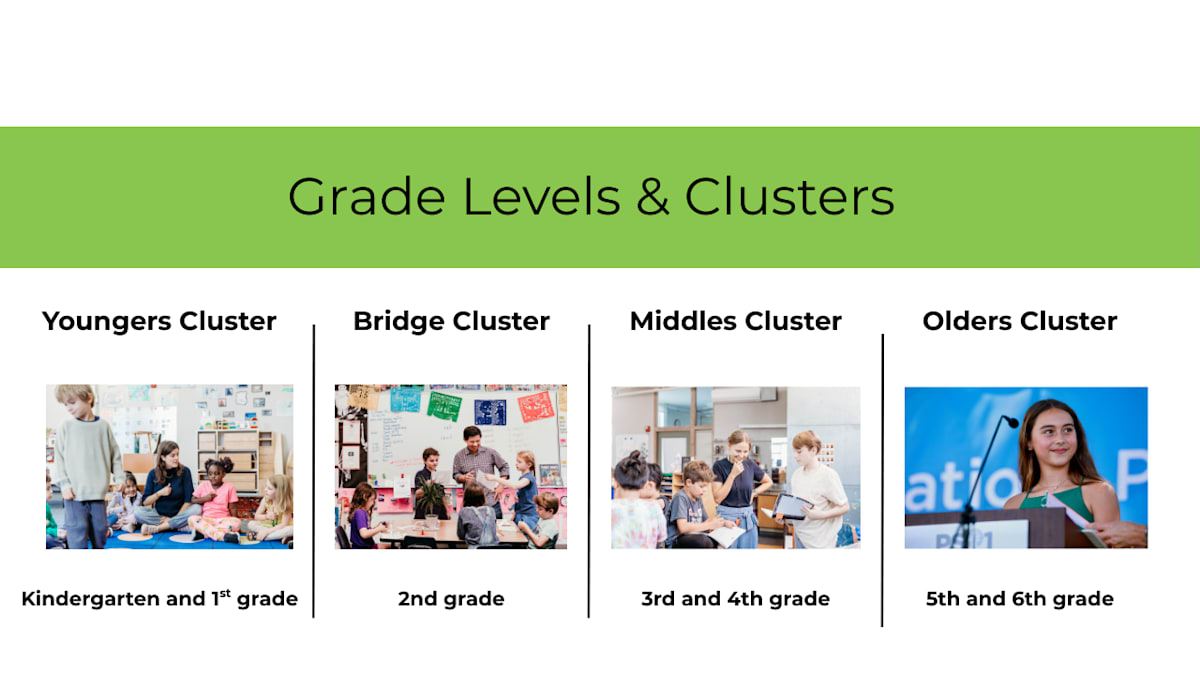
Instead of separating children strictly by single grade levels, we bring them together in multi-age classrooms spanning two grades.
In these authentic environments, students learn with and from one another: exchanging ideas, modeling behaviors, practicing responsibility, and developing leadership and social skills.
Eight of our nine classes bring together students from two consecutive grade levels, in K-1, 3-4, and 5-6 pairings, so children experience an evolving peer community each year. Second grade has a bridge year of its own.
This structure gives every child the chance to be both a leader and a learner throughout their school journey, building adaptability, empathy, and collaboration.
The question every family asks
If students are in multi-age classrooms, how do you make sure everyone is challenged?
Students are challenged based on readiness, growth, and individual needs, not simply age or grade level. Because teachers work with students over multiple years, they develop a deep understanding of each learner's strengths, interests, and next steps. That lets them provide support when it is needed and extension when a student is ready for more.
Does anyone repeat the same curriculum twice?
No. Social studies and science run on a two-year rotating cycle, so students encounter fresh material each year. Math is the one subject taught by grade level, which keeps progression precise and aligned with developmental needs. Across all subjects, teachers follow grade-level standards while tailoring instruction to meet students where they are.
What do children actually gain from the mix?
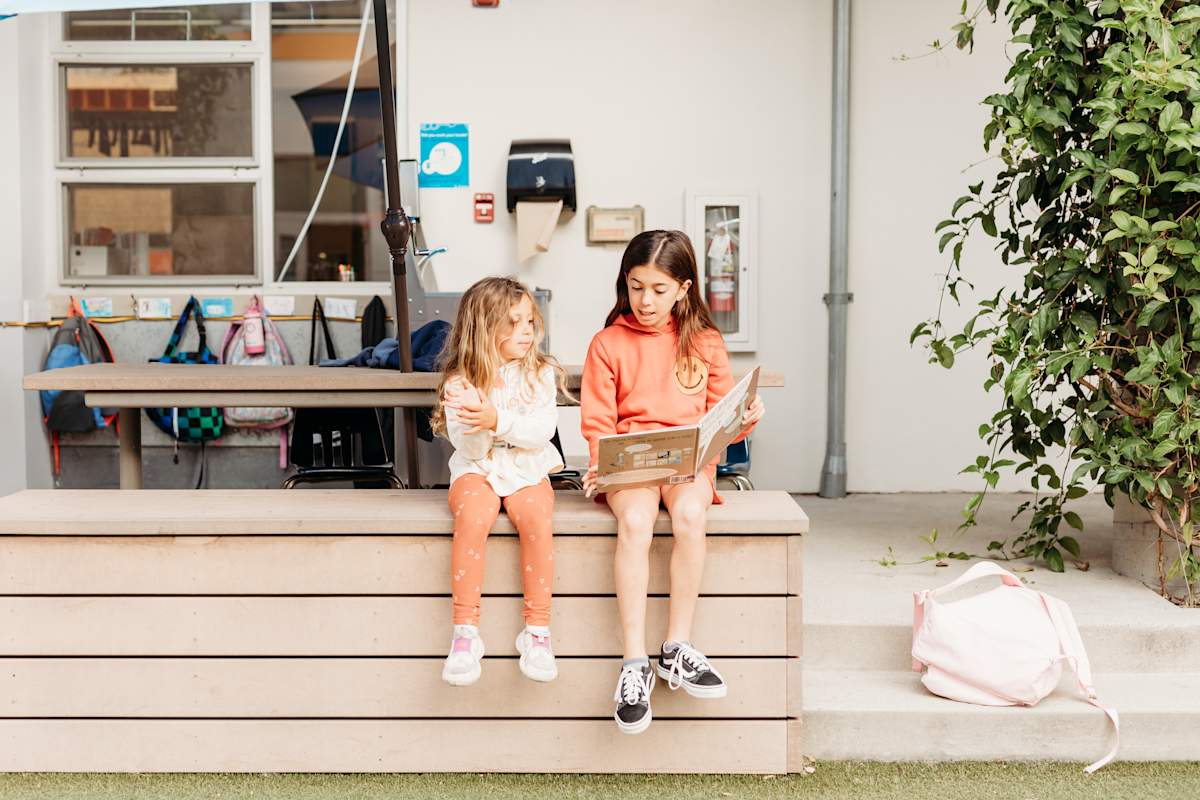
Students learn from peers with different strengths and perspectives. Younger students are exposed to advanced models of thinking and working. Older students consolidate their own understanding by explaining it. Both halves of that exchange are real academic work.
The multi-age structure made such a difference for my son. Early on he learned by watching older peers, and later he had the confidence to take on a leadership role himself.